By Saanichton Physiotherapy
15 Oct, 2016
Knee Pain, Manual Therapy, Orthotics, Osteoarthritis, Pain sciences, Physiotherapy, podiatrist, Preventative Therapy, Running, Sports Injury, Sports Therapy
Anatomy, Barefoot Running, bracing, chiropractic, chiropractor, custom foot insoles, custom foot orthotics, knee brace, Knee Injury, Knee Pain, massage therapist, orthotic footwear, orthotic insoles, physio, physiotherapy, Posterolateral knee injuries, registered massage therapy, research, RMT, sports injury, sports therapy
At first it was just a niggle in your knee when you climbed stairs or were squatting. Then the pain and stiffness became more than a niggle and you began to feel it when walking, sitting and resting.
You may be hearing popping or cracking sounds in your knee, and notice that your knee “gives out” every now and again.
The knee is an amazing but complicated joint and knee pain is one of the most common reasons that people visit a physiotherapist.
Pain behind the kneecap is commonly called runner’s knee because it is often seen in athletes and people with an active lifestyle, although it can also be seen in everyone from the young adolescents during growth spurts to elderly people.
The medical term is patellofemoral pain syndrome. It is pain behind the kneecap where your patella (kneecap) slides along the groove in your femur (thighbone) beneath.
Pain and stiffness occurs when the kneecap does not slide smoothly and misaligns causing it to rub against your femur. Repeated mis-tracking causes pain, stiffness, and ultimately can cause damage to your kneecap joint surface.
Knee pain is most commonly noticed during activities that involve knee bending, jarring or weight bearing.
People most at risk are those whose sport or activity includes running, jumping or the need to land in a squatting position. Sports most commonly associated with knee pain include running, netball, volleyball, basketball, tennis, skiing and cycling. Many tradies such as tilers and carpet layers also have problems.
Causes of Runner’s Knee
Overuse – increased activity or increased duration and intensity of the activity
Changes in footwear or playing surfaces
Tight outer thigh muscles and weaker inner thigh muscles causing the kneecap to be pulled to one side
A twisting injury
Surgery
Excess weight
Flat feet and lack of arch support
Weak hip control muscles
First aid for Runner’s Knee
Generally, knee pain is gradual onset, which means it gradually increases in severity over time.
As with most injuries, the best initial first aid is rest, ice packs (15 minutes at a time every 2-3 hours), and taking anti-inflammatory painkillers such as ibuprofen.
You do not need a referral from a doctor to see a physiotherapist. If the pain is moderate, then you can seek treatment with your Physiotherapist immediately.
Physiotherapy Options
Physiotherapy is a proven treatment for runner’s knee. Your physiotherapist may initially tape or strap your kneecap to help pull it back into alignment and reduce pain.
Massage and joint mobilisation techniques are also commonly used to reduce swelling and restore movement.
You will be prescribed exercises to stretch and strengthen muscles that may be contributing to the problem. These exercises will change as you heal and will gradually increase in intensity to match your recovery.
If you wish to continue exercising to maintain your fitness during your treatment, then explore swimming, deep-water running and low-impact gym equipment such as elliptical trainers.
Depending on your knee pain cause, you may also be advised to explore arch supports, orthotics or different footwear. You may also require postural or technique correction in your chosen sport to stop problems from recurring, as well as a strength and conditioning plan to get you back to full competitive fitness.
In our experience, over 90% of runner’s knee physiotherapy clients will be pain free within six weeks of starting treatment. However, for severely damaged joints or arthritic joints, surgery may be required.
Things to Remember
Runner’s knee or patellofemoral pain syndrome is a common cause of knee pain.
It is a gradual onset injury and is most commonly noticed during activities that involve knee bending, jarring or weight bearing.
Physiotherapy is a proven method to speed healing, and prevent recurrence of knee pain.
Future management may also involve assessment of your gait and posture during exercise, and prescription of arch support or custom made orthotics.
More
By Saanichton Physiotherapy
25 Jul, 2016
Back Pain, Chiropractic, Foot Ankle Pain, Foot orthotics, Orthotics, osteopathic, Physiotherapy, research, Running, Sports Therapy, Training
Barefoot Running, custom foot insoles, foot injury, foot orthotics, foot pain, massage therapy, orthotic footwear, orthotics, pain science, plantar fasciitis, Running Injury, shoe insoles, Sprained ankle
As your cold-weather footwear makes the seasonal migration from the back of your closet to replace summer’s flip flops and bare feet, don’t underestimate the benefits of padding around naked from the ankles down.
Barefoot activities can greatly improve balance and posture and prevent common injuries like shin splints, plantar fasciitis, stress fractures, bursitis, and tendonitis in the Achilles tendon, according to Patrick McKeon, a professor in Ithaca College’s School of Health Sciences and Human Performance.
The small, often overlooked muscles in the feet that play a vital but underappreciated role in movement and stability. Their role is similar to that of the core muscles in the abdomen.
“If you say ‘core stability,’ everyone sucks in their bellybutton,” he said. Part of the reason why is about appearance, but it’s also because a strong core is associated with good fitness. The comparison between feet and abs is intentional on McKeon’s part; he wants people to take the health of their “foot core” just as seriously.
The foot core feedback loop
McKeon describes a feedback cycle between the larger “extrinsic” muscles of the foot and leg, the smaller “intrinsic” muscles of the foot, and the neural connections that send information from those muscle sets to the brain.
“Those interactions become a very powerful tool for us,” he said. When that feedback loop is broken, though, it can lead to the overuse injuries that plague many an athlete and weekend warrior alike.
Shoes are the chief culprit of that breakdown, according to McKeon. “When you put a big sole underneath, you put a big dampening effect on that information. There’s a missing link that connects the body with the environment,” he said.
Muscles serve as the primary absorbers of force for the body. Without the nuanced information provided by the small muscles of the foot, the larger muscles over-compensate and over-exert past the point of exhaustion and the natural ability to repair. When the extrinsic muscles are no longer able to absorb the forces of activity, those forces are instead transferred to the bones, tendons, and ligaments, which leads to overuse injuries.
It’s not that McKeon is opposed to footwear. “Some shoes are very good, from the standpoint of providing support. But the consequence of that support, about losing information from the foot, is what we see the effects of [in overuse injuries].”
Strengthening the foot core
The simplest way to reintroduce the feedback provided by the small muscles of the foot is to shed footwear when possible. McKeon says activities like Pilates, yoga, martial arts, some types of dance, etc. are especially beneficial.
“Anything that has to deal with changing postures and using the forces that derive from the interaction with the body and the ground [is great for developing foot core strength],” he said.
McKeon also described the short-foot exercise, which targets the small muscles by squeezing the ball of the foot back toward the heel. It’s a subtle motion, and the toes shouldn’t curl when performing it. The exercise can be done anywhere while seated or standing, though he recommends first working with an athletic trainer or physical therapist to get familiar with the movement.
He notes the exercise seems to have especially positive results for patients suffering from ankle sprain, shin splints, and plantar fasciitis. It’s even been shown to improve the strain suffered by individuals with flat feet.
The payoff could be more than just physical, as there could be financial savings. With strong feet, McKeon suggests that — depending on the activity — consumers may not need to invest hundreds of dollars in slick, well-marketed athletic sneakers (though he doesn’t recommend going for the cheapest of cheap sneakers, either). People with a strong foot core can actively rely on the foot to provide proper support, rather than passively relying on the shoes alone.
“You might be able to get a $50 pair of basketball shoes that don’t have the typical support that you’d expect. Because you have strong feet, you’re just using the shoes to protect the feet and grip the ground,” he said.
The easiest way to get started on strengthening the small muscles of the foot, though, is to kick off your shoes in indoor environments.
“The more people can go barefoot, such as at home or the office, is a really good thing,” McKeon said.
Ithaca College. “Going barefoot: Strong ‘foot core’ could prevent plantar fasciitis, shin splints, and other common injuries.” ScienceDaily. ScienceDaily, 17 November 2015. <www.sciencedaily.com/releases/2015/11/151117181929
More
By Saanichton Physiotherapy
20 Jul, 2016
Foot Ankle Pain, Orthotics, Osteoarthritis, Pain sciences, research, Running
custom foot insoles, foot injury, foot orthotics, foot pain, orthotics
The Instituto de Biomecánica (Biomechanics Institute-IBV) has developed SUNfeet, insoles which are customized to the anatomy of the user’s foot, which increase the comfort of footwear and reduce pain and fatigue in the feet. This product is now available in Europe.
These insoles display an innovative technology used in their development: a combination of a system for capturing and digitizing the shape of the foot which is easy and intuitive for the user via smartphone and a 3-D printing system which allows insoles to be manufactured in a totally personalized manner.
SUNfeet arose from the idea of combining the latest trends in health, technology and fashion to develop exclusive insoles which make footwear more comfortable and care for the feet, thus promoting an active lifestyle.
The SUNfeet smartphone app was designed for the 3Dcapture system, making it possible to obtain the shape of the foot extremely accurately and conveniently from any location.
The process is very simple: while seated, the user places the bare foot on one side of a sheet of paper. The app itself will guide him/her until three images of each foot are obtained. The files are then sent to a server which reconstructs the foot in 3-D, using pattern recognition and shape analysis algorithms. The 3-D image of the foot can be displayed on screen in less than one minute. Finally, the system assigns a unique identification code to each image, which will subsequently be used to design the customized insole.
At the same time, this technology is also present in the manufacturing process through 3-D printing, opening the way for more creative designs and the customization of the functional properties of resistance and flexibility, adapting them to the specific needs of each user and activity.
The power and precision of SUNfeet technology allow for optimal customization: not only are the insoles adapted to the anatomy of the foot, but also to the characteristics and lifestyle of each user. With this in mind, three different models of insole have been created (Sports, Casual and Elegant), taking into account the type of activity and the characteristics of the footwear in order to select the most suitable materials and thicknesses. Thus, the impact cushioning, energy return and pressure distribution requirements are adapted to each use and to the characteristics of each individual.
Museum Exhibition
The Instituto de Biomecánica (Biomechanics Institute — IBV) has introduced, as part of the Science Museum “Príncipe Felipe” of Valencia, this SUNfeet technology, incorporated as a new module of the exhibition “We Take Care About Your Quality of Life.”
IBV director, Javier Sánchez Lacuesta, reminded those present that “this exhibition -promoted by CVIDA association- was developed by IBV in collaboration with the Science Museum and opened in October 2007 in order to make available to the citizen technologies, products and services that take care of their health and wellbeing. This is an interactive show in which the visitor can check their skills in different environments and attractions.”
The foot care is essential to reduce hassles that come to limit the way of life. Using comfort insoles helps keep feet healthy during daily activity. SUNfeet combines a precise system of capturing and digitizing the foot and a 3D printing system that allows develop fully customized insoles.
The user can select the insole that best suits his lifestyle: Casual insoles for continued use shoes that achieve comfort and reduce foot fatigue; Elegant insoles that fit with most elegant and formal shoes; and Sports insoles that improve performance and help to prevent injuries.
Juan Carlos Gonzalez, IBV Clothing Director, showed attendees the performance of this system, highlighting the ease of use, accuracy when carrying out the capture of the foot and versatility of the system that allows getting perfectly tailored insoles to the needs and characteristics of the user and the function to which they are intended.
Asociación RUVID. “SUNfeet technology for the customization of comfort insoles using a smartphone.” ScienceDaily. ScienceDaily, 19 October 2015. <www.sciencedaily.com/releases/2015/10/151019072208.htm>.
More
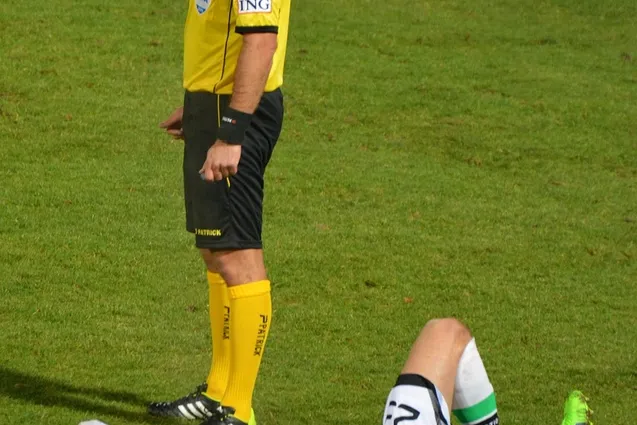
The risk of injury during competition matches is twelve times higher than during training sessions in players of the Professional Football League. The most common ones are muscular injuries and those resulting from overexertion, which imply recovery periods of around one week. These findings follow an extensive epidemiological study that analyses the characteristics of injuries to professional footballers in Spain conducted by researchers at the Universitat Jaume I of Castellón, the Polytechnic University of Madrid and the University of Exeter (UK).
The research has allowed to register systematically, for the first time in Spain, injuries sustained during an entire season for a total of 728 players from 16 first division teams and 11 second division teams.
Diego Moliner, director of the research group LIFE at the Universitat Jaume I, explains that in total 1,293 injuries were recorded in the first division and 891 in the second division, thus confirming an increased risk of injury during competition matches than during training sessions. The overall incidence of injury among professional players from first and second division was 5.6 injuries per thousand hours of exposure. “But the most significant is that in the case of the competition the number of injuries per thousand hours of practice was 41.7 versus 3.6 produced per thousand hours of training, which means that the risk of injury is almost twelve times higher during a competitive match.” Nearly 90% of injuries occurred in lower limbs, and the primary cause was overexertion, which was the origin of three in four injuries. Regarding the type of injury, the most common ones were muscle and tendon, which were registered in one in two cases.
Regarding the evolution during the season, the incidence of injury during training sessions was greater during the preseason and declined progressively during the competitive season, while the impact of injury during competition matches progressively increased throughout the season.
Among the key findings of the articles, the authors have highlighted the need to implement new protocols for preventing injuries that minimize the high economic and sporting cost it means for professional football teams the high injury incidence among their players, especially during the preseason and end of the competitive period.
In the research, led from the Faculty of Physical Education and Sports of the Polytechnic University of Madrid, the contribution of the group LIFE of the UJI has focused on the design of data analysis and on the drafting of the two scientific papers. LIFE research group within the Department of Education of the UJI, focuses its studies in the field of physical activity and health, and is currently developing a project on sport, adolescence and health funded by the Ministry of Economy and Finance in the National Plan for Scientific Research (www.proyectodados.uji.es).
Journal Reference:
1.Javier Noya Salces, Pedro M. Gómez-Carmona, Luis Gracia-Marco, Diego Moliner-Urdiales, Manuel Sillero-Quintana. Epidemiology of injuries in First Division Spanish football. Journal of Sports Sciences, 2014; 32 (13): : 10.1080/02640414.2014.884720
More